The audio drama
This is the first piece of writing for weeks that isn’t a script.
My free time is and has been for some months now filled with either script writing or, sound design, editing, or production.
New Dawn – which is still very much alive, was and is really a forerunner to creating a full audio drama. I had an inkling of this when I conceived of New Dawn. It was to be a hybrid bridging the gap between actual play and full audio drama; however, its real purpose was to see if I could write and create audio drama.
So here I am just over a year on from the concept of that hybrid project and I am creating a full audio drama series.
Taking a secondary theme from at this point the yet to be started third series of New Dawn – Paranormal Nation has birthed as its own entity. It has been a learning curve and one that I have not taken lightly. I have consumed a lot of media and physical books on writing for audio drama and sound design for audio drama, film and theatre. It’s quite a big subject.
However, I am now hooked. Not just on the result but also the process.
Let’s start with the writing.
I had an idea. A story that I wanted to tell, and I knew the ending of that story. A good thing apparently. It is far easier to work backwards from an ending than meander from the beginning with no definitive ending in sight.
Script writing suits me. I am a conversational writer. I, if I am honest, am not entirely sure of the correct use of punctuation beyond the comma and full stop. My ethos is – if the reader isn’t blue in the face at the end of the sentence, from lack of punctuation or extravagantly long sentences, then I am doing OK.
Script writing is conversation. Conversation is messy. Well, that suits me fine.
The interesting thing about writing the series is that I had originally set out to tell a story around a series of events, however as time went on, I realised the story was about the people. As those people developed word by word, sentence by sentence, I realised that the story was secondary. Of course, the story must be there, but it was my main characters journey through that story that mattered and not so much the cinematic events. And so, word by word, sentence by sentence, those main characters have grown.
The second interesting aspect and revelation to me was that a single scene is around three pages maximum of script. That script is also 12pt Courier – an unofficial standard it seems in script writing.
This isn’t something that I have arbitrarily decided. Conventional wisdom suggests that a single scene should not exceed three pages maximum to keep things moving with a single page equating to approximately a minute in ‘real’ time.
That made writing scenes far less intimidating than I might have imagined. The scene must either; drive the story forward and / or provide important information, reveal something about the characters speaking garnering connection from in this case the listener, or contain some level of conflict. This simple premise makes the writing so much easier. There is no space to waffle – to write that dialogue that seems great but serves no purpose. Paranormal Nation I had decided from the outset would consist of fifteen-minute episodes to allow me to invest in the level of cinematic sound design I wished to achieve. The realisation that five and at most six scripts constituted an episode was a very happy realisation. I very quickly realised that even in the early stages of writing I had four episodes mostly written rather than possibly the single episode that I presumed I had written so far. I did of course have to go and review those scripts to ensure that there would be a suitable flow within a single episode allowing for a beginning, middle and climatic end. That, however, was not that difficult to achieve.
The other nice aspect of script writing is that unlike writing an article or a book, you don’t have to particularly be concerned with having an expansive knowledge of the technical aspects of writing. I am still not entirely sure when to use a semi-colon or a colon or the right or wrong use of the oxford comma. However, some do see the misuse of such things as a crime! It may be why my A level English teacher hated me, and especially when I passed.
Of course, you still have to structure the story, but the story is delivered through dialogue. Dialogue is messy. Half finished thoughts, detours from the point and less than perfect grammar. Breaths punctuate, not a dot and squiggle. It’s quite liberating.
There are four main characters in the Paranormal Nation series. These are apart from a couple of additional incidental voices are all we hear. This was a deliberate choice. Firstly, practicality – I didn’t want to be writing for a vast cast of characters, and secondly, I wanted the four characters to be the focus.
However, there is a fifth ‘character’ or at least as far as I am concerned. The sound design. Every piece of foley work, the non-diegetic sounds underpinning scenes and the music. I also decided that for this project I would create from scratch every moment of that fifth character.
This has been quite the journey. I have, as I have previously written about, a good understanding and a love of sound design. In principle at least. This journey into creating second by second that fifth character’s part has led me to a lot of study and learning and a new appreciation for the art.
There has built up over the last few months a vast array of new software on my production computer to allow me to apply effects and create sounds and music. I have written before on this subject, and now, while my appreciation and understanding of how sound affects things is more or less the same, my techniques and ‘must have’ software has expanded considerably making my previous writing seem a little naïve.
I have entered a world of building sound from scratch second by second, something I find immensely engaging and satisfying. It is one thing to use a stock sound effect or layers of them, or a piece of music and ‘make it fit’. It is something entirely different to use musical keyboards and patches to create those effects and music in real time with the scene.
I must at this point say a massive thank you to Helder Borges Santos, whose website you can find here http://www.helderborgessantos.com/
As an experienced sound designer for film and game, and especially in the horror and suspense genres; Helder has been kindly providing me with his professional feedback on aspects of my sound design for this series. The advice given has been invaluable and is very much appreciated.
Another thank you is to Ellinor DiLorenzo https://ellinordilorenzo.com/ Actor, host and creator of TheLost Mountain Saga Podcast https://lostmountainsaga.com/ and co-founder of the Nordic-American production company FRAUHAUS – who has I believe willingly given feedback on request and whose feedback is much appreciated and respected.
The sound design aspect really is the fifth character. It underpins, supports, predicts and enhances every moment of the production. When creating the sound design if I can mute the dialogue and still feel the atmosphere of the scene then I know that I am somewhere near to where I want to be. If when I am creating the sound design or music, I feel emotion; be it sadness, dread, fear – then I know that I am hitting the mark.
I have unfortunately hit the point where my aspirations seem to be out running the specification of my computer and looking at current prices without the possibility of upgrading, I am having to find work arounds to streamline my production. This however does have in some ways a benefit. I have when a scenes tracks become too much for the computer to handle or at least efficiently, gone back track by track checking effects and found that several of them as the scene has progressed now provided very little enhancement or you might say ‘effect’. Removing them brings the sound design back to a level where it is manageable and apparently without losing any of the feel I had intended for the scene.
It has taught me to be more discerning in what, how and where I bring in those additional pieces of software.
Beyond the standard requirement of compression and equalisation I have settled on a regularly used set of plugins for areas such as reverb, distortion and spatial placement and ones that suit specific requirements in scenes. It has been a learning curve as for example I now use a range of reverb plugins as their individual ‘feel’ suits different use cases. The non-diegetic sounds and instruments that is another matter. There are an overwhelming number of options and possibilities in even one package. I have found myself loosing hours and days in just putting together different tracks to create a feeling, and often ahead of writing the script. I find it easier to write the dialogue if I can already picture the ambience of the scene. I have written on this before – I can see the scene way ahead of realising it. However back to the plethora of options. I have pretty much settled on Steinberg and Halion 7 and several packages such as Nordic Noir and Baltic Shimmers to name only two along with a number of their instruments, Frozen Plain – I must admit I have purchased and use their entire range of cinematic packages and Excite Audio’s – Evolve Air. These are complimented with instruments from other software companies ranging from low-fi piano and grand piano to full string ensemble. With so many options one of the things I am working very carefully on is creating a signature sound that embodies Paranormal Nation. That is not to say a ‘single sound’ but rather a culmination of a standard set of sounds and musical instrument that embodies the series and gives it an identity.
So, there we are.
The writing and sound design is pretty much my go to space these days when all the day’s other tasks are completed. I am less active in other areas where I used to spend time and that is fine with me. I am consuming less - unless I am actively learning or I am consuming to critically listen to dialogue or design. There is a lot of noise in the world. Those ‘world sounds’ as with sound design need careful consideration. I believe that in life as with sound design you need to filter out what is just ‘noise’ and adds nothing and that which contributes something. Be it sound design or your life - cut the filler.
I am still learning the craft of writing, creating an audio drama and of sound design, and that is its own reward. The result I hope will be that I am creating something that will be memorable on release later in the year. Only time will tell, but it won’t be for lack of effort.
There is no rush I am finding to get to the journeys end, and this is something new for me. I have always been impatient to share the result. This time that urge is not there. The impetus is to create something I know is the best that I can make it, and that goal shifts every day as I believe that I improve, or at the very least learn something new that has the potential for my improvement - both in writing and sound design. Things that sounded good to me a month ago I review and can see improvements to be made. Paranormal Nation will not release until I feel that it is worthy of entering the audio drama space.
Until then I will mostly be found at that production computer and even after release I hope that I will be creating whatever follows.
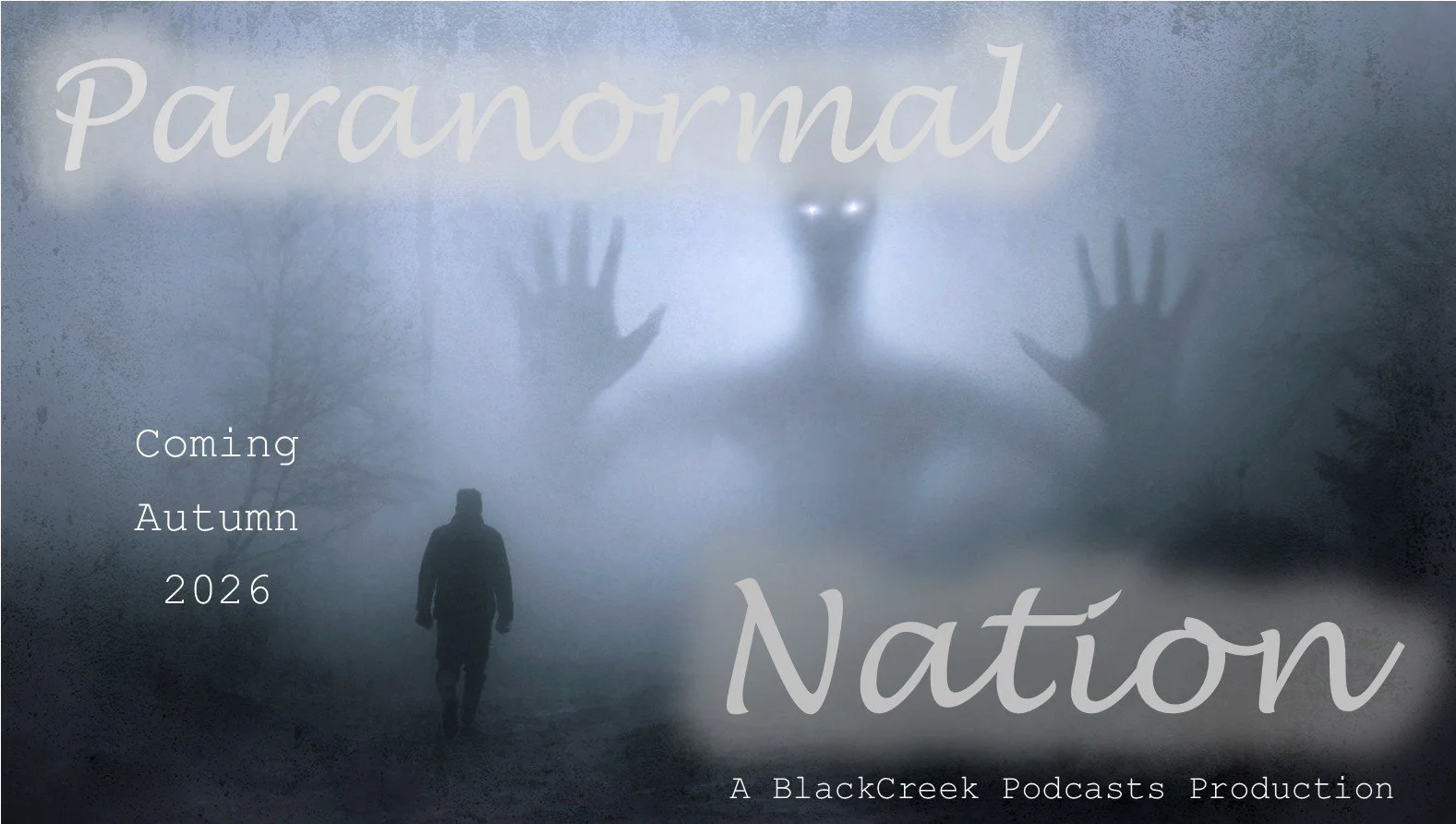
Image by Stefan Keller from Pixabay