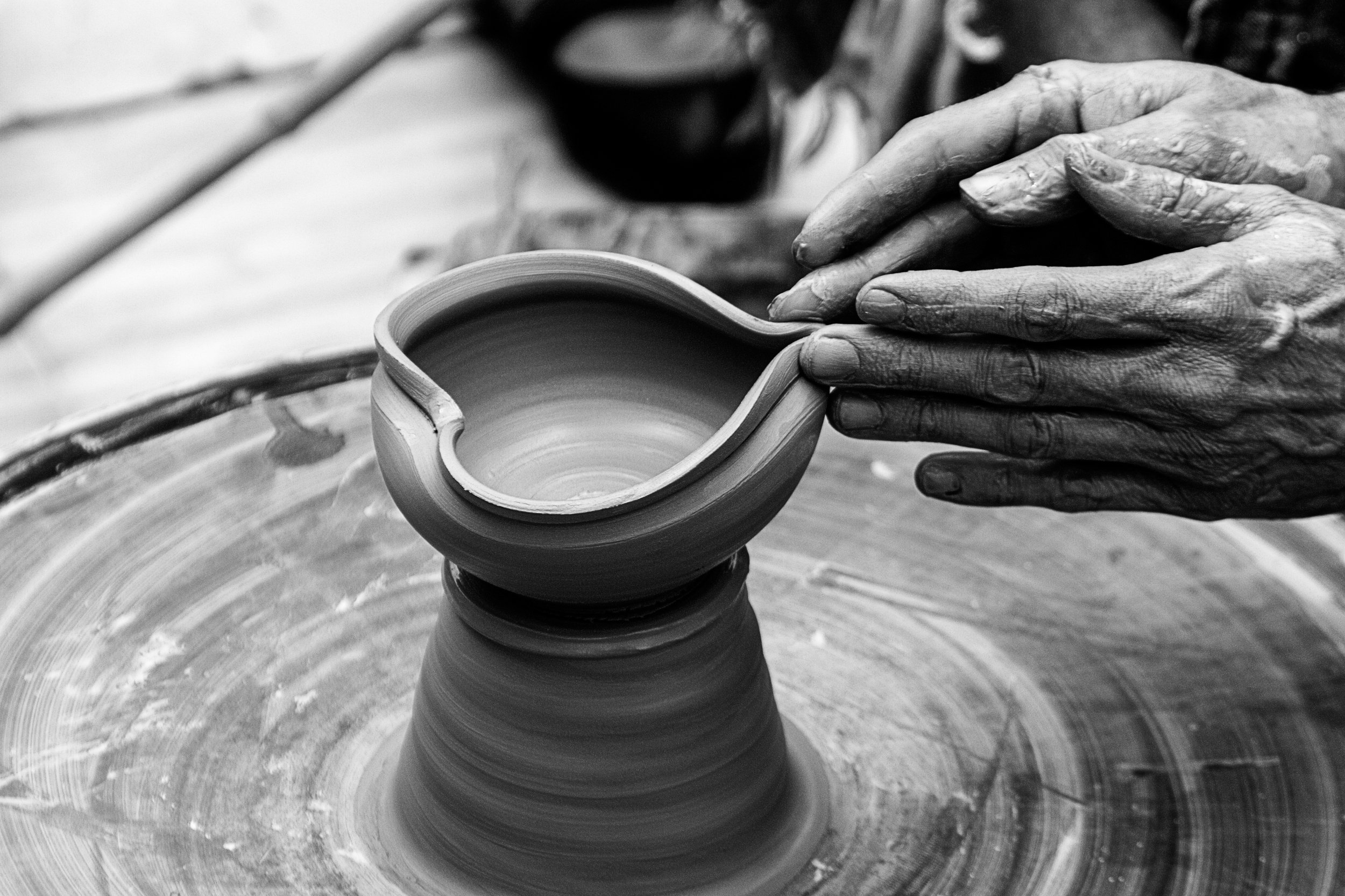
Many years ago, when at art college my pottery teacher took me to one side and asked me to consider becoming a potter. He had often berated me for not following the course requirements. I did not produce sketches and drawings before starting to throw the clay. I preferred to throw the clay and see where it took me. I would then produce the ‘required’ drawing afterwards.
He told me on that specific occasion that how I worked made me a potter.
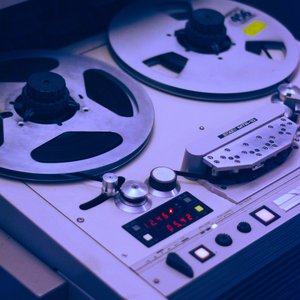
I feel the same about the music and sound beds I create. I may have a concept but the instruments and ‘sounds’ are the elements that really drive the destination.
And this brings me onto today’s thoughts.
Once again, I find myself searching for sounds. Instruments created from objects ranging from recordings of the elements to a broken Dulcitone.
It is a strange position that I find myself in. The ease of access and sheer choice of instrument vsts is mindboggling. They range from free, to collections costing many hundreds of pounds, and most in the middle ground costing £40 - £100 for a single instrument. If there is an instrument or ‘sound – then there will be software somewhere to allow you to play that instrument.
Many of the larger collections and major companies proudly display the production companies and broadcasters using their instruments; The BBC, Netflix, Amazon TV, specific production houses and individuals such as Hanz Zimmer.
I now find myself watching a film or series and picking out individual instruments from these collections. I recognise them because I have them sitting there on my production PC and I have used them. On the one hand it is something special and not a situation that would have existed not that long ago. The ability to now use the same instruments as a sole creator in a home studio and to be able to produce music and sound beds that are in league with those that are heard in mainstream film, TV and radio is quite special. I am sure not that many years ago for the small home producer those instrument ‘sounds’ would have been out of reach requiring actual musicians and a recording studio, or equipment that was far out of reach. The conversation then may well have been ‘I just can’t compete’, ‘I wish I could produce music that sounds like that’.
Now, with a computer and a midi keyboard (or several!) and a personally curated selection of those instrument vsts, a home producer can create music and sound beds indistinguishable from the major players and production houses. That’s a good thing. I also feel in some way it’s a bad thing.
Now, I would not want to be without the opportunities and options that these instruments provide, however, I do find myself wondering if I really want what I create to sound like the mass media. But isn’t that a good thing – I can create my own projects with professional sounding music and sound beds indistinguishable from a major player? Yes. But it is too easy to follow ‘the crowd’ and be part of that homogenised music and sound beds. I think one of the great and freeing things about being a sole creator is that you don’t have to ‘fit in’. This may differ on a case-by-case basis. A home producer, sound designer or musician may need to create projects within the mainstream remit, however for someone like me who creates their own projects and to no-one’s specifications or expectations other than my own then I feel stepping outside that box is far more interesting on a creative level.
I recently watched the ‘making of’ videos for the music created by Hans Zimmer for the recent Dune films. Looking for different sounds that would suit the atmosphere of the film and especially the expansive deserts, instruments were created or modified. Zimmer worked with Chas Smith, a sculptor whose creations were meant to be struck, bowed and manipulated in a multitude of ways. He also said that a home supplies store became instrumental (no pun intended) in creating and modifying instruments with PVC pipe and the like to “Invent instruments that don’t exist. Invent sounds that don’t exist”.
That’s exciting.
Now, I don’t have access to a sculptor, and I play keyboards so there isn’t a lost of scope there. I am also no Hans Zimmer - but I can look for ‘soft’ instruments that use innovative techniques and materials to produce sounds outside of the ‘norm’.
I have written about these before and specifically in relation to PianoBook a collective of musicians and sound designers who create instruments from everyday objects; nature sounds, city ambience, broken instruments or instruments played non-traditionally – such as bowing or plucking piano strings. The sounds produced are then further processed through compressors and a multitude of other effects to finally produce a playable keyboard instrument.
For my latest two creations I have very much tried to mainly use these community created instruments as they offer something different and I believe special. Some may be prone to limitations that the mainstream created instruments do not have, however I feel those limitations force creativity in their use enhancing the finished piece. Sometime the limitation is in the range of notes, possibly only covering a couple of octaves, other times the sounds are very specific and will only fit niche use, and I file these away with project uses in mind. When ever I add a new instrument or two to my collection I am always inspired by the music and sound beds that I can create with them, but the inspiration and possibilities always seem more with the community created ones, even with their limitation.
As a sole indie creator, I want to create outside of the box. I have no one to please but myself, and if someone else appreciates what I have created all the better – but that isn’t the main aim.
I want to see where I can go with my creations and as a creator. I want to learn and grow every time I play a note on the keyboard, and I don’t want to follow the crowd.
The first episodes – Paranormal Nation – The Interviews, The Massachusetts X-Files and Shattered Reality – The Prop are both out now on all major podcasting platforms.
If you do listen, then please drop a comment on the podcast platform of get in touch with me from here.
.
If you are interest in talking about sound design and music requirement for a project, please contact me at blackcreekpodcasts@gmail.com
Free to use music and soundbeds can be found on my SoundCloud Artistspage.